
What's in a Title?
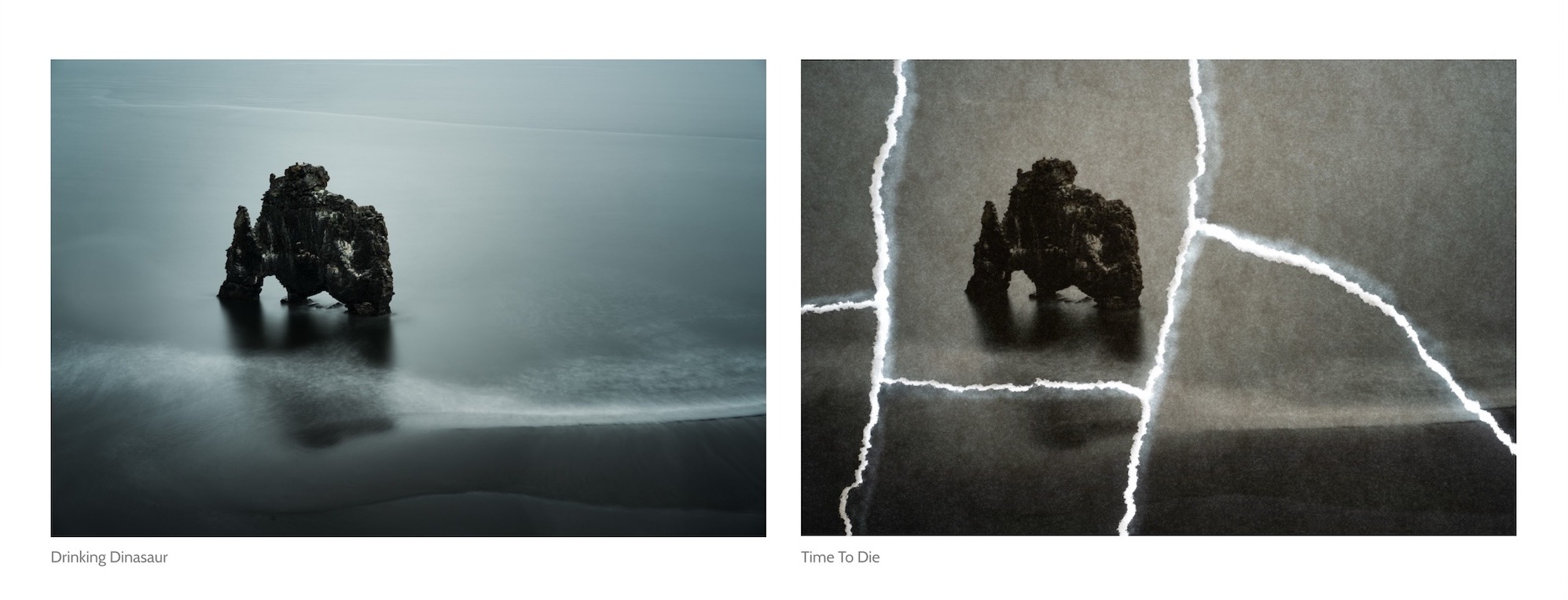
The images in this portfolio come from one of the most extraordinary and unique countries I’ve ever visited: Iceland. I fell deeply for the land, its culture, and its people, and I never tired of heading back. But in the years we returned we witnessed an explosion in visitor numbers, doubling over the course of a decade (and increasing from 4,500 in 1950 to over 3 million by 2019). All arriving by air or cruise liner and putting increasing pressure on both local and global resources. Iceland is not alone in this phenomena, as the growth of tourism has exploded, with a demand for ever more remote and exotic locations.
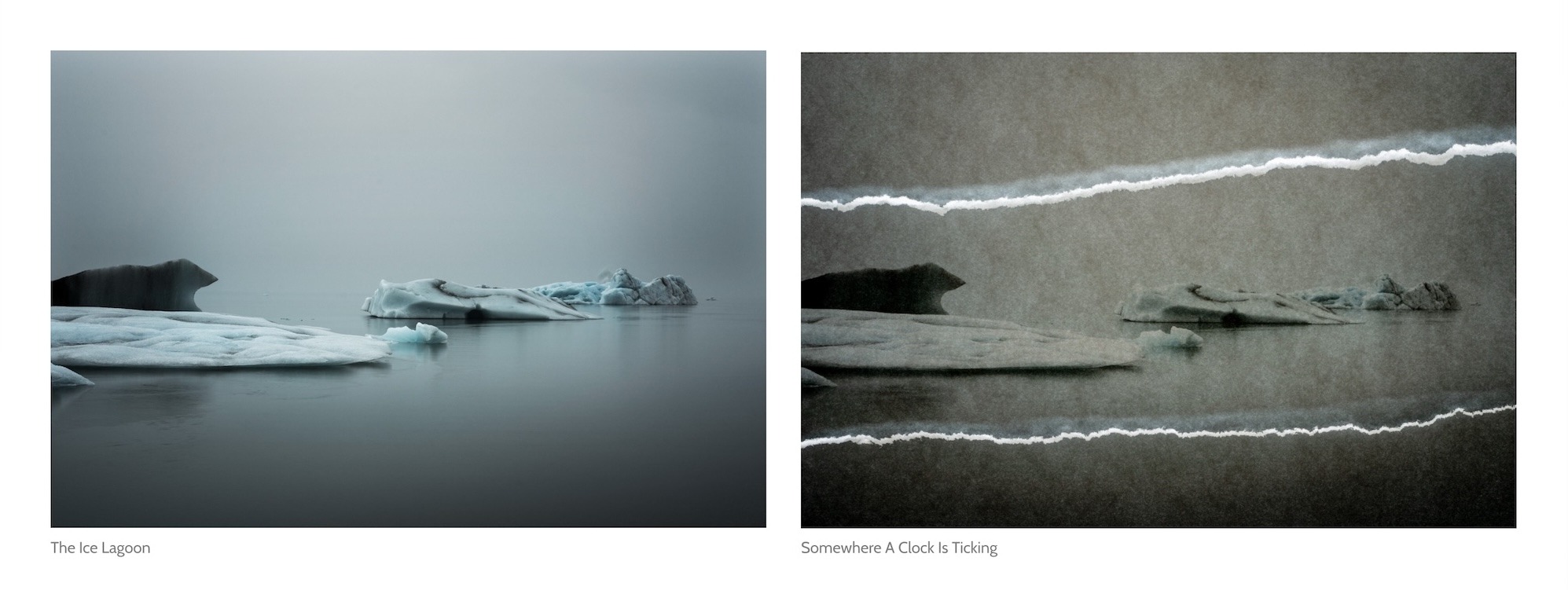
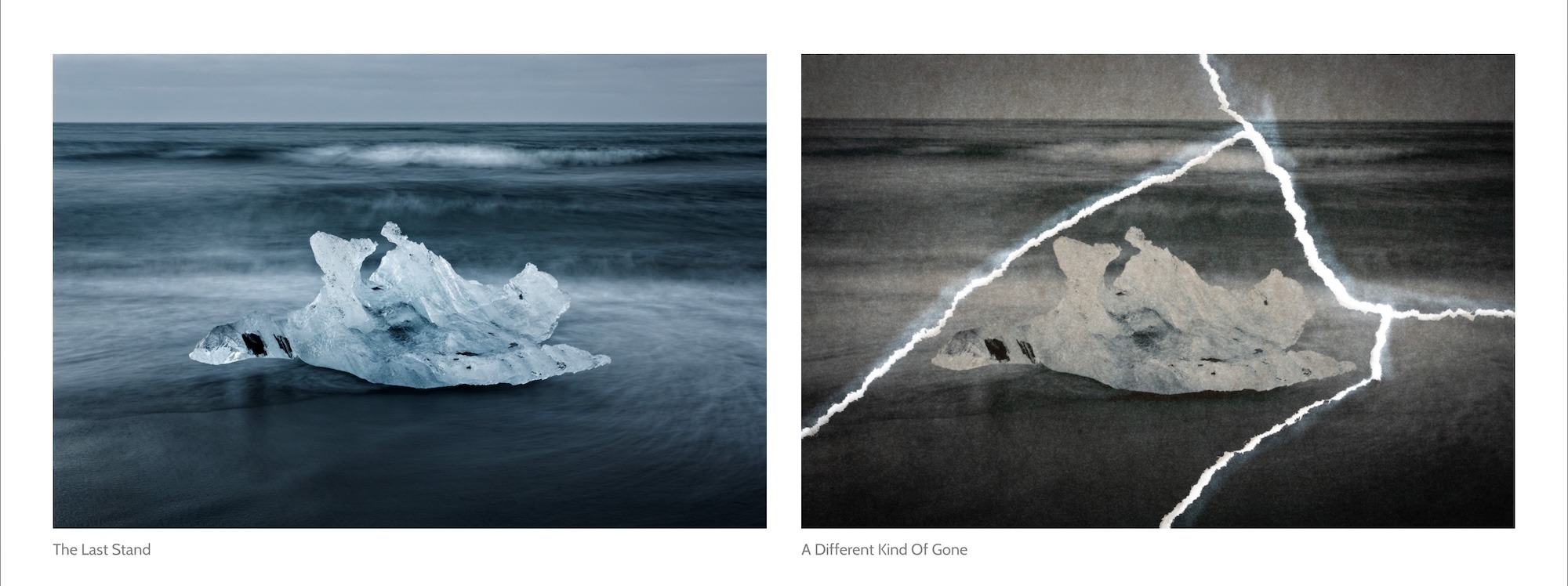
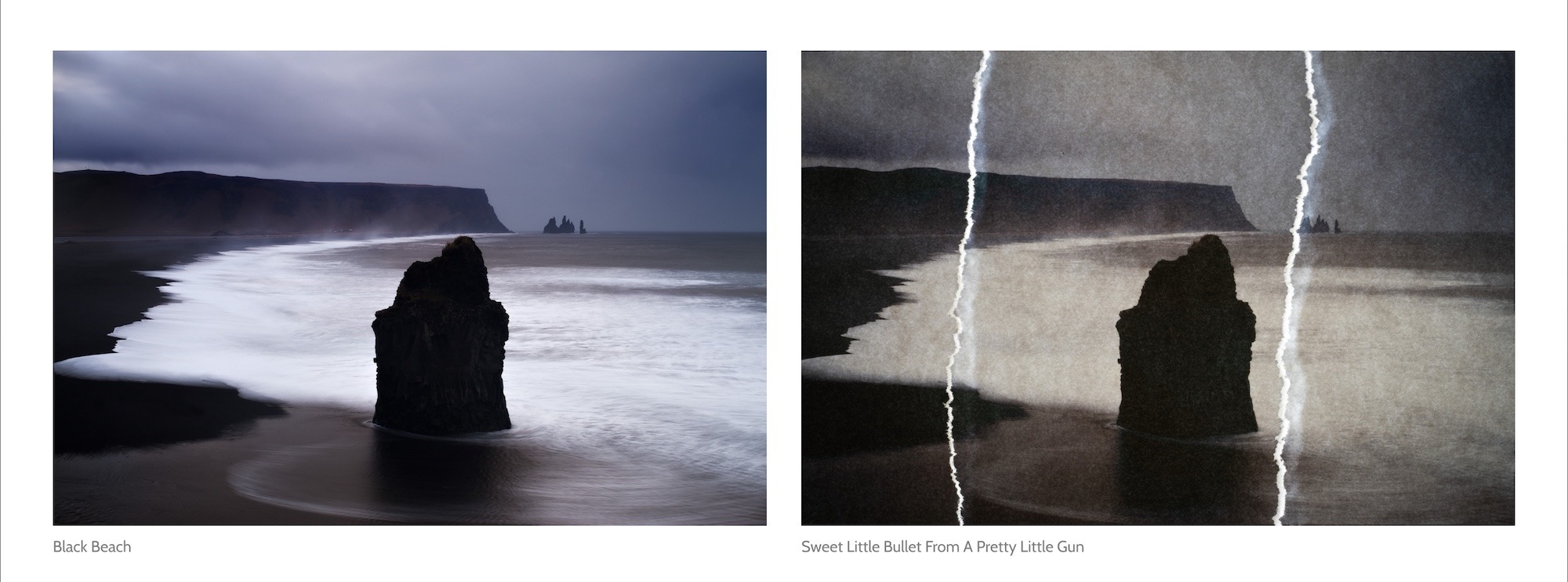
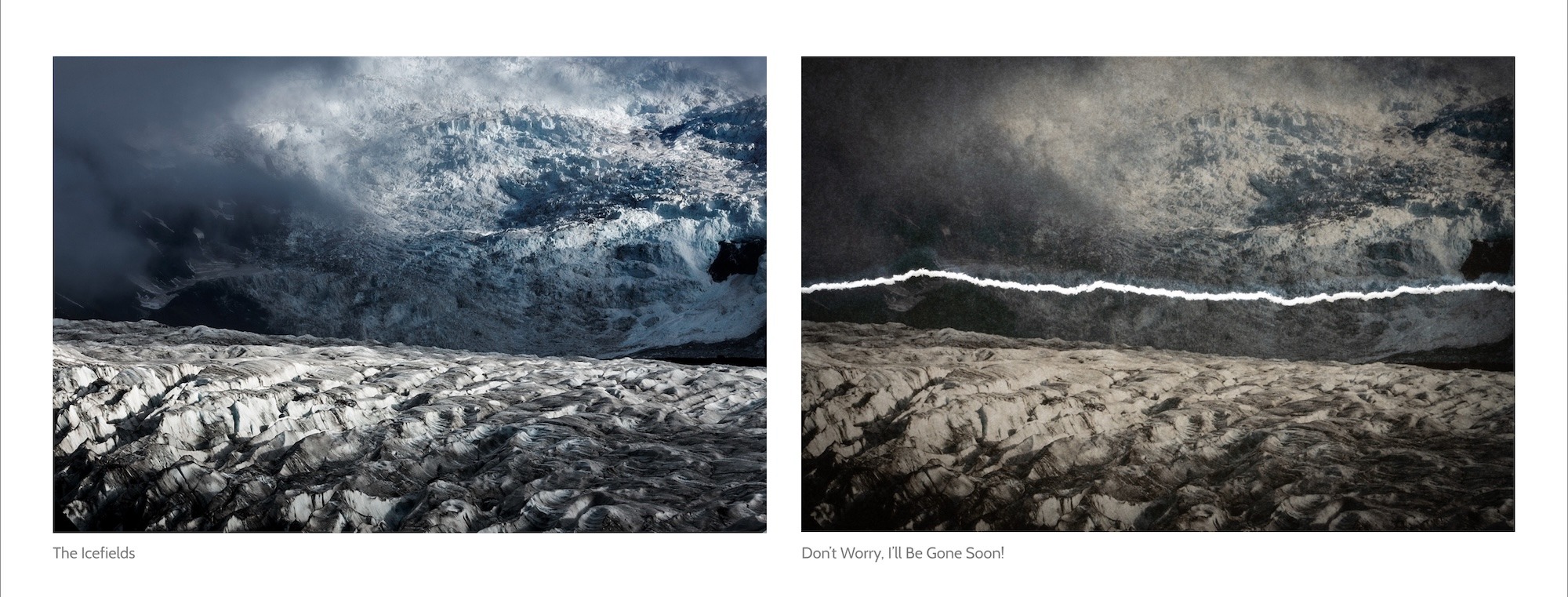
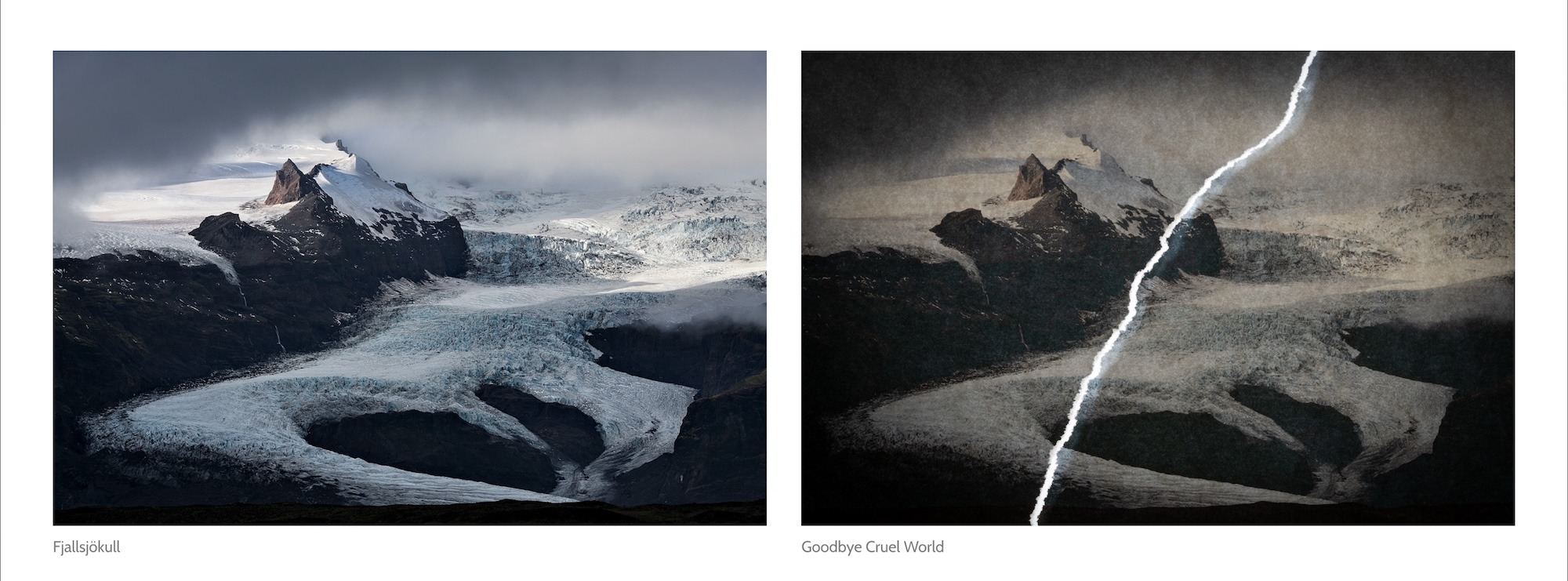
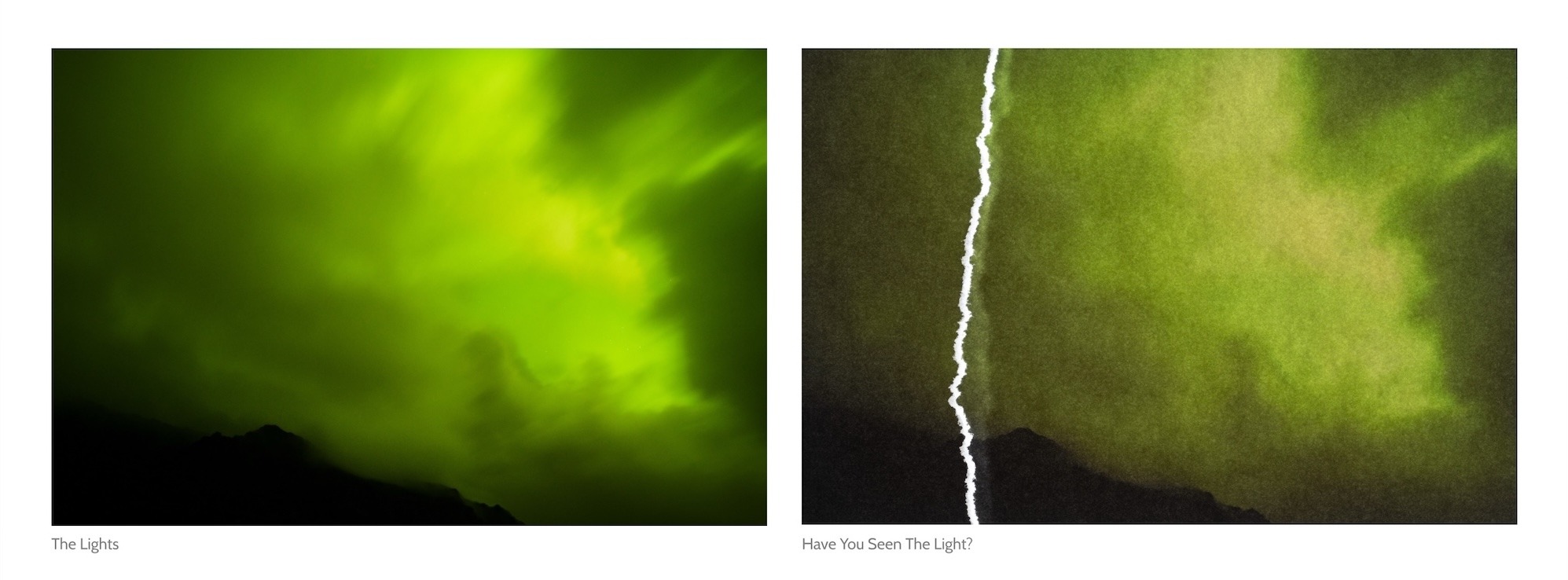
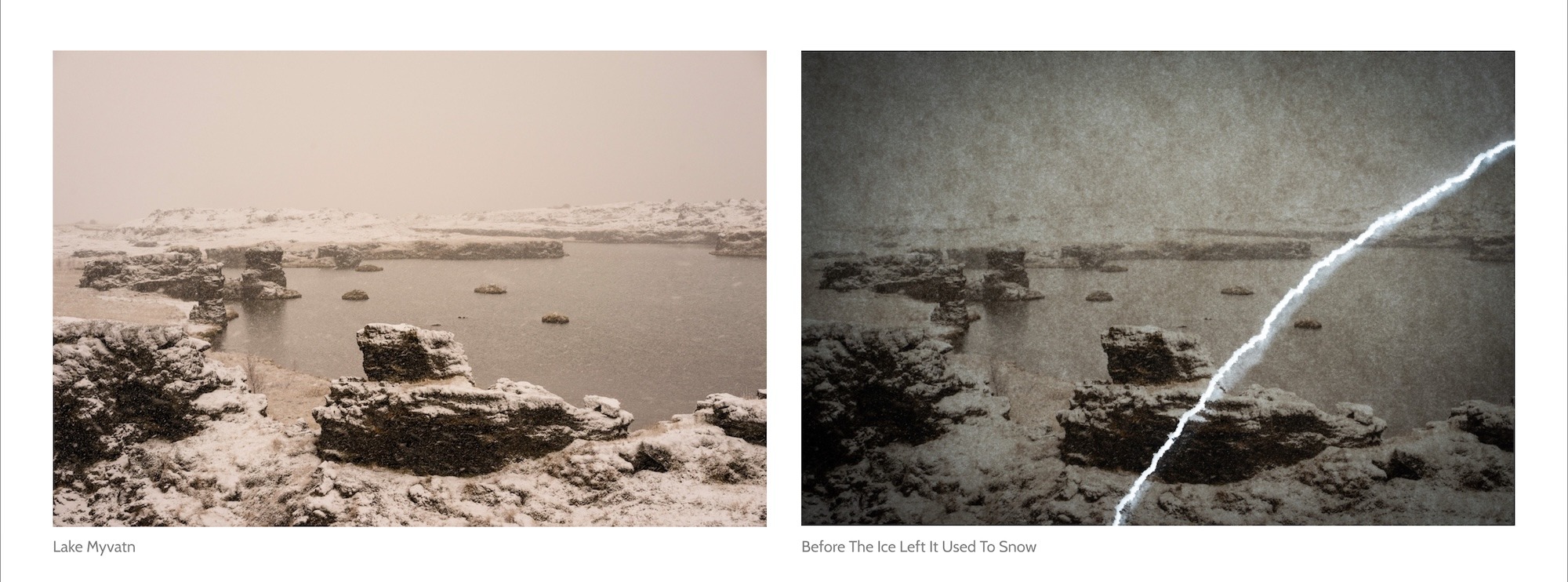
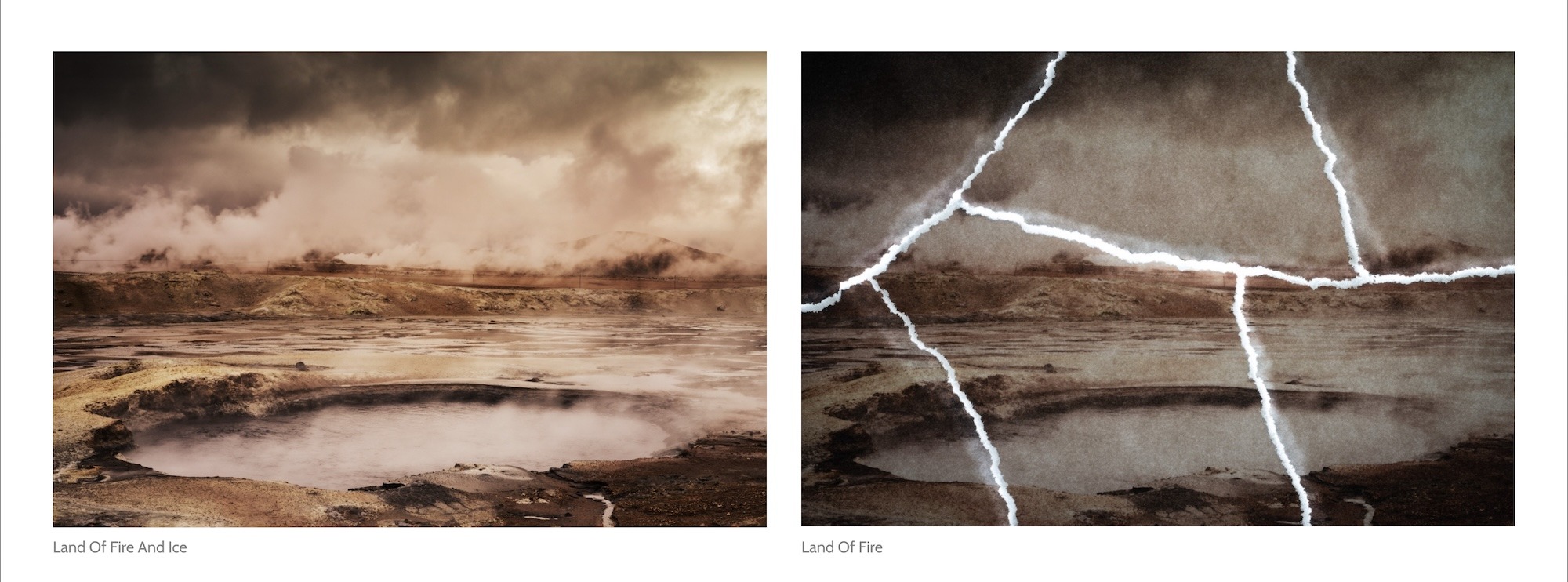
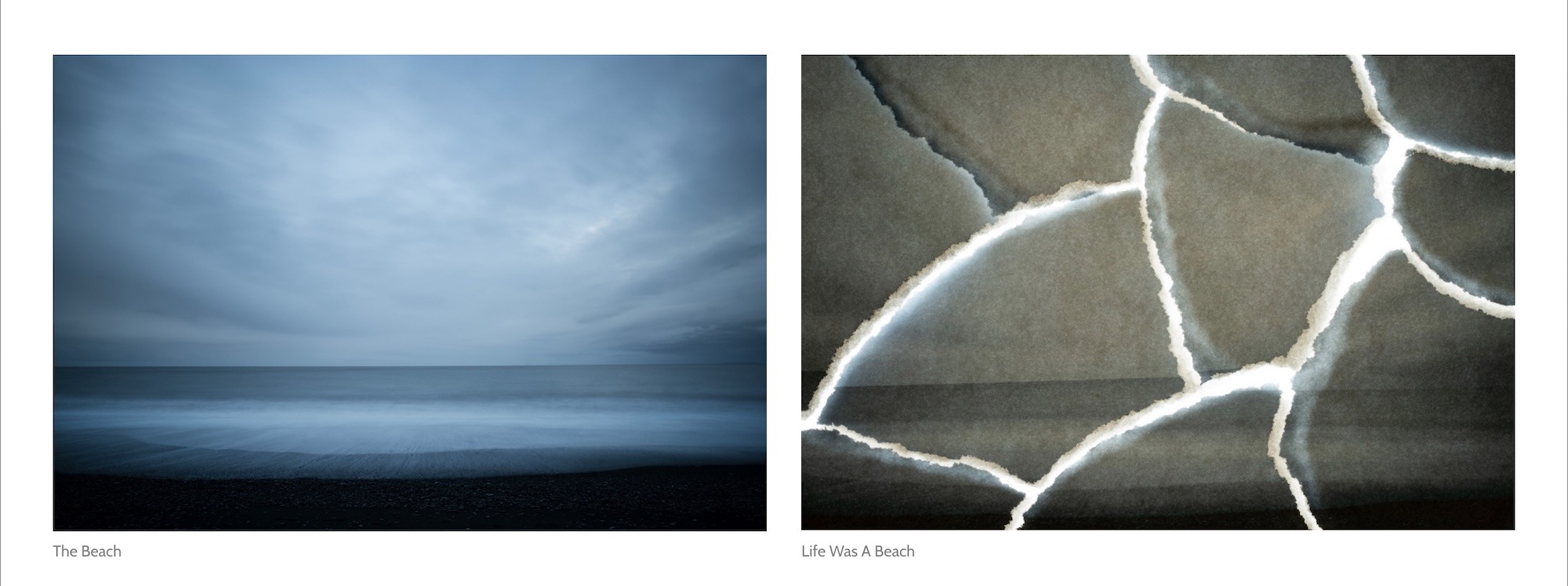
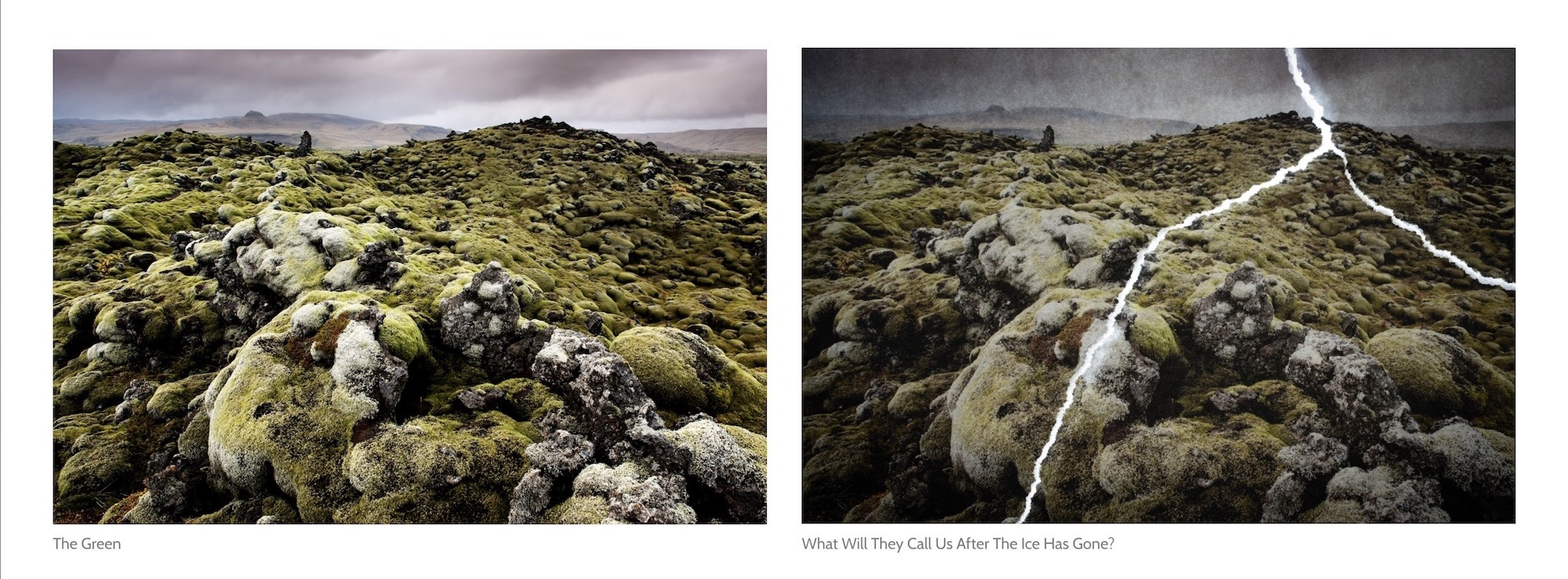
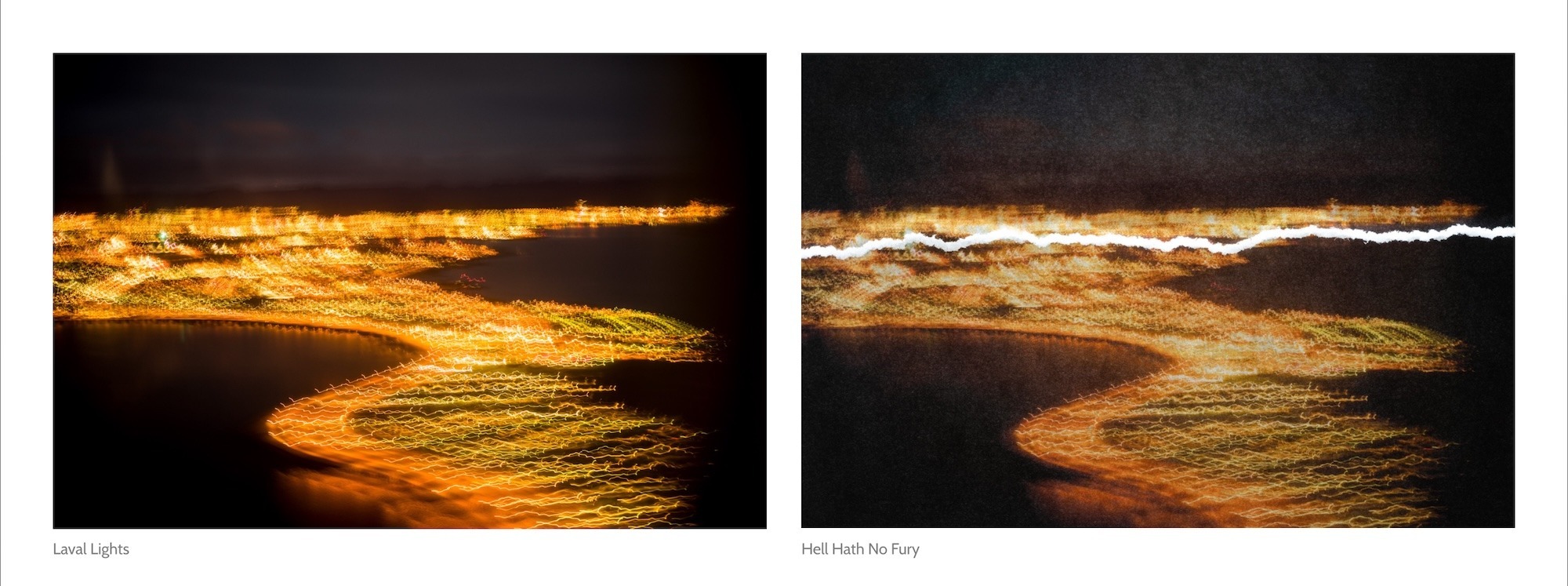
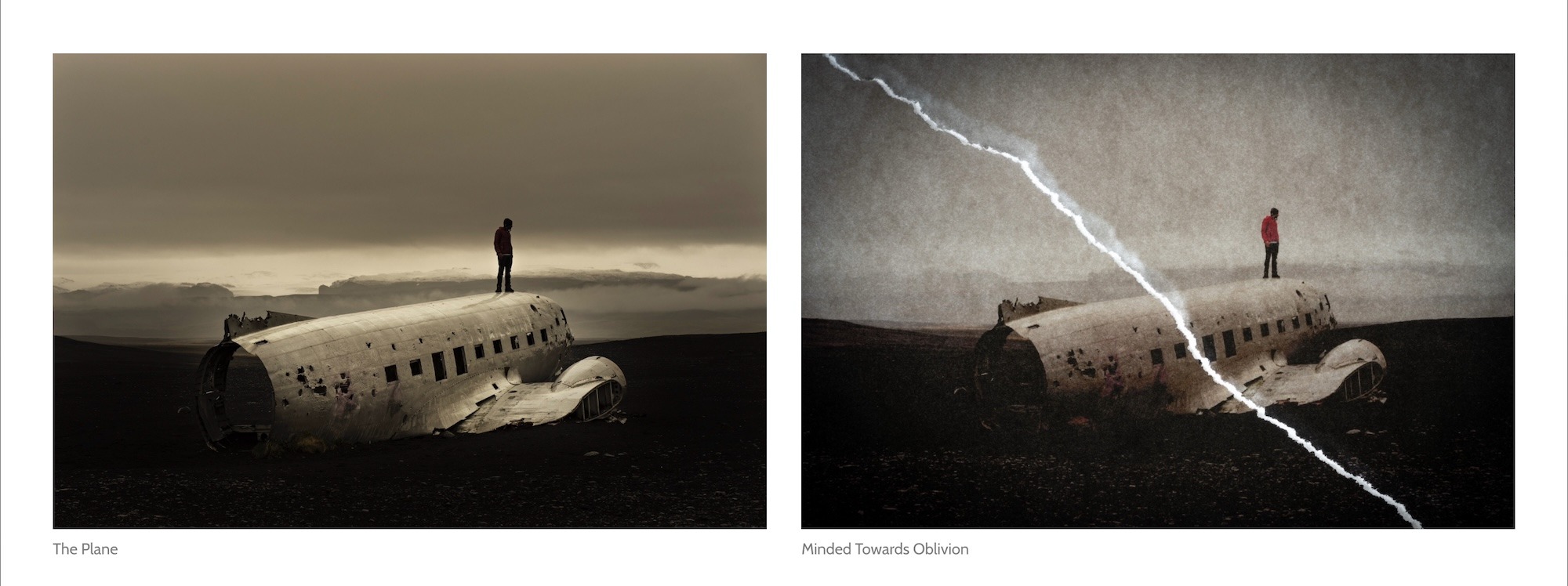
We realised – with an increasingly uncomfortable clarity – that through our travels and workshops we were adding to the very problem we cared deeply about. So one day in 2017 we just stopped. We stepped away from all location-based workshops, giving ourselves three years to complete existing commitments and rebuild our practice around a new (at that time unknown) purpose. At the time it was an unbelievable wrench as I loved both the places we visited and the people we met along the way, but in hindsight it was one of the most rewarding decision of my life. It literally taught me to see from a different perspective.
The originally processed photos (on the left of each diptych) served both a personal and commercial role, reflecting my photographic journey as a landscape photographer as well as our workshop enterprise. Then later, as I was reflecting on the new purpose to my photography, I returned to the unprocessed images and re-edited/retitled them by way of a personal artivism – not to erase their past, but to acknowledge how images and framing shape desire, meaning and intent. How a title can amplify the seduction of place, or ask harder questions about our relationship to it. I began to realise the power of photography to influence and persuade, and the extent to which imagery contributes to the society in which we live.
Through this and other reflections I began to realise I saw myself less and less as a landscape photographer and that I was no longer focussed primarily towards the visual and aesthetic nature of the image – the light, form, texture and composition. What increasingly drew my interest was the complexity of place, its users (both human and non-human), the tensions and harmonies, the frictions between competing needs and how the lens could not only tell stories, but persuade and ask questions. In doing so my photography became less about capturing scenery and more about listening to the land, the many lives entangled with it, and the consequences of their actions.
This portfolio forms a very personal marker to that shift in thinking as I sought to redefine my practice and purpose. A growing realisation that how we name and frame a thing influences how we see it—and perhaps how gently we choose to move through it.