
Where the Wild Things Are
Twelve years earlier Morag and I had just commenced Zero Footprint, our first sustained exploration of place through the discipline of a reduced carbon footprint. At the time, we could not have known that the project would alter not only our photographic practice, but the way we chose to live.
The premise at the time was simple yet demanding – every image in the portfolio was to be captured from the same location. It took 5 years to complete that first phase, which allowed us the time to witness changes not only with light and season, but through weather events, quiet succession, and simply by doing nothing at all and allowing nature to proceed on her own terms.
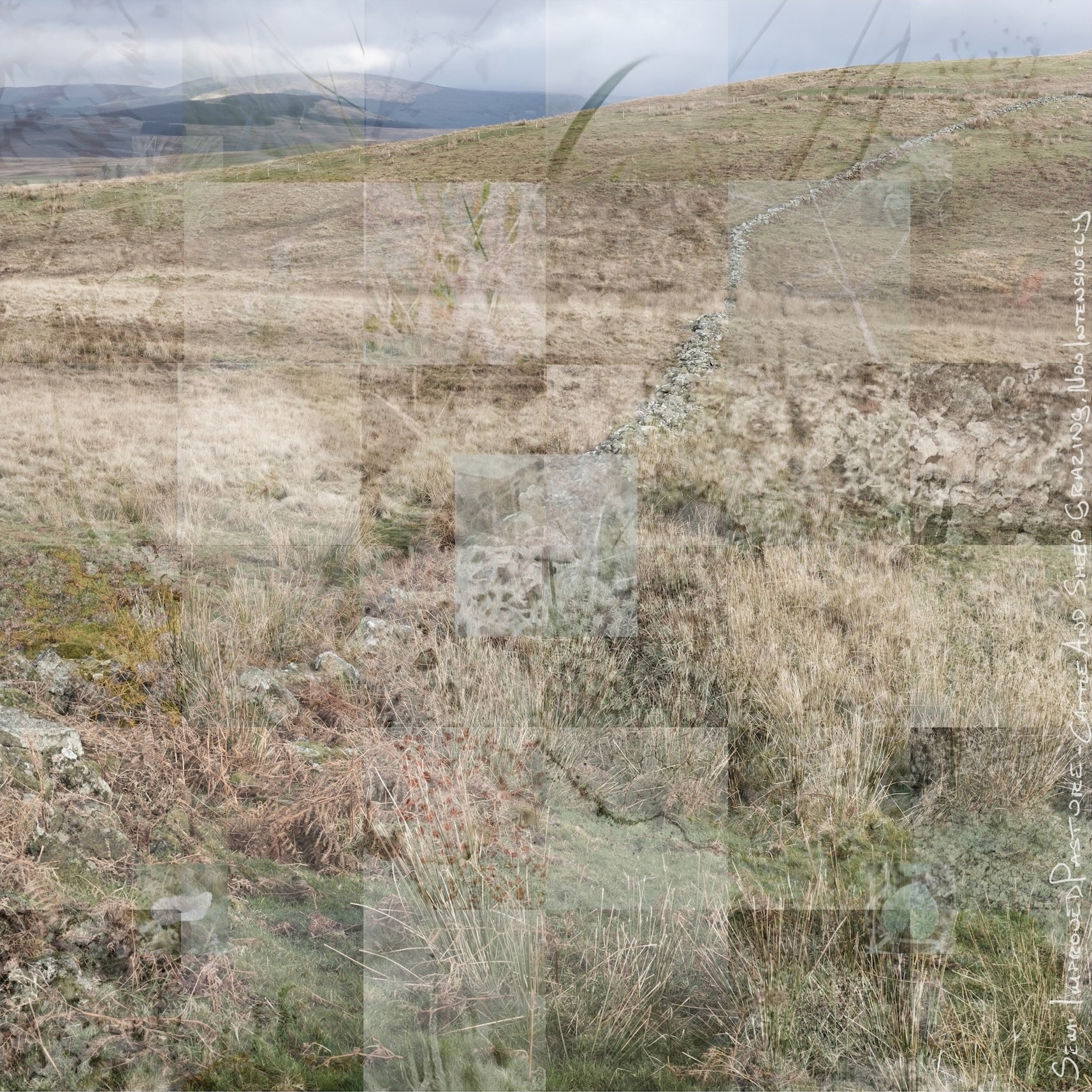
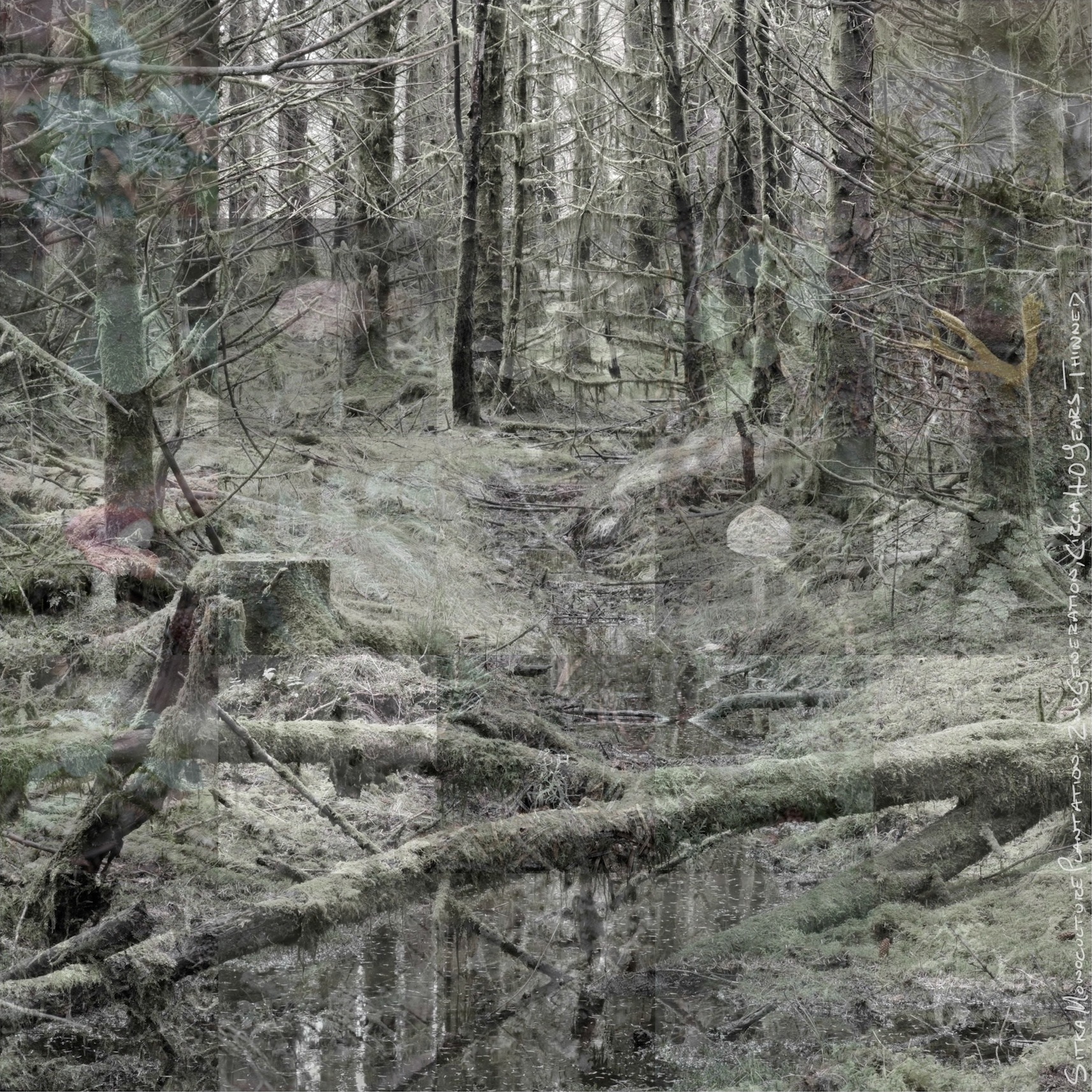
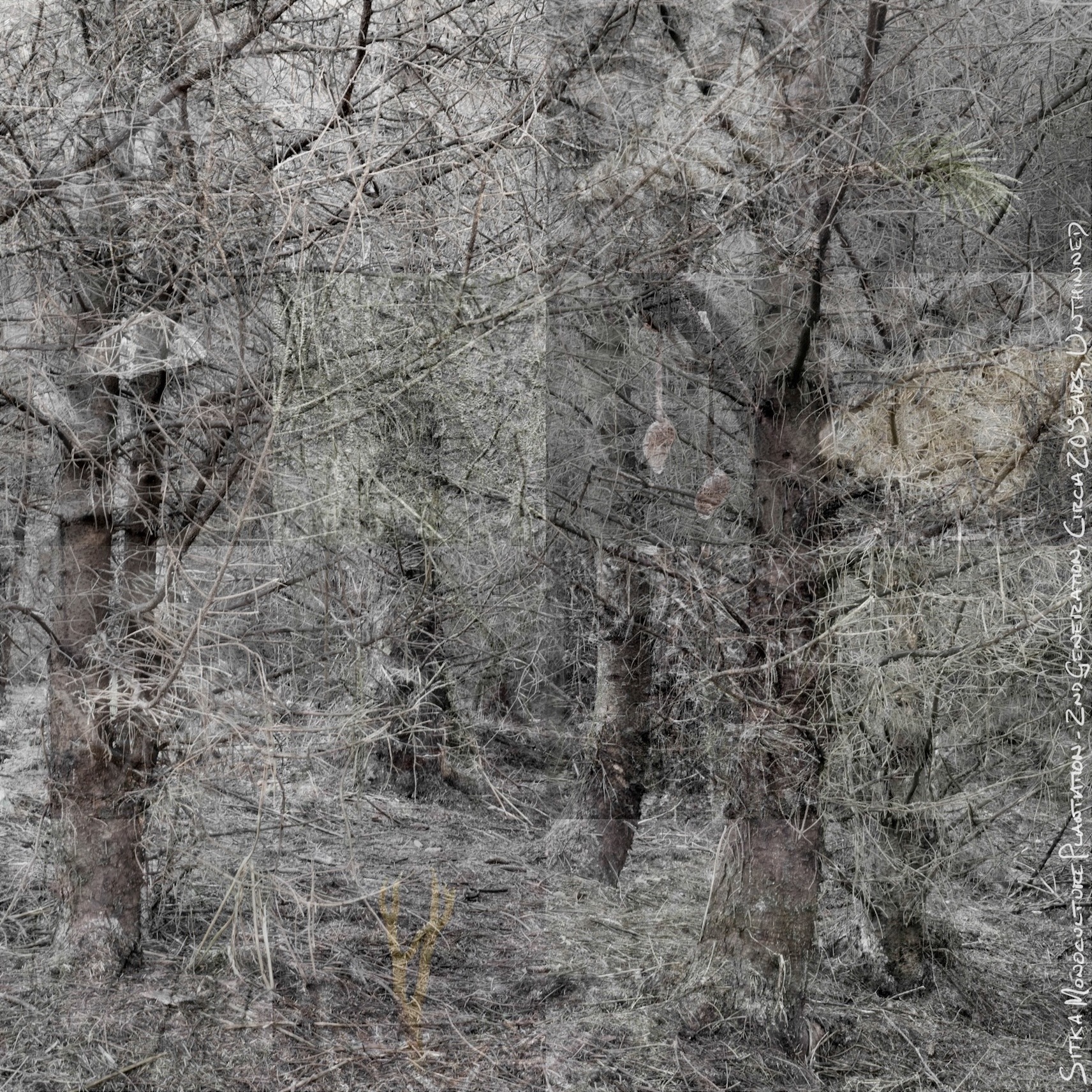
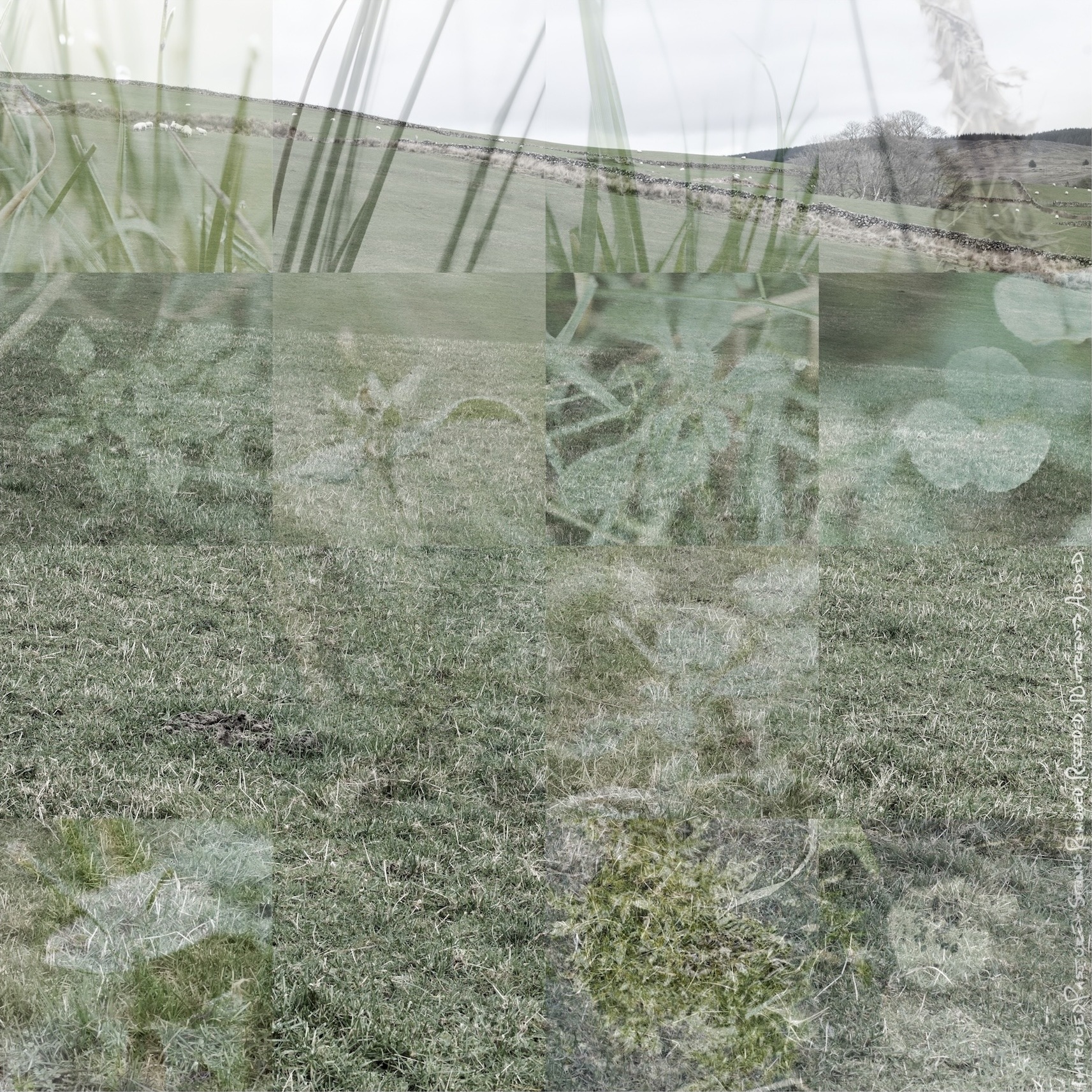
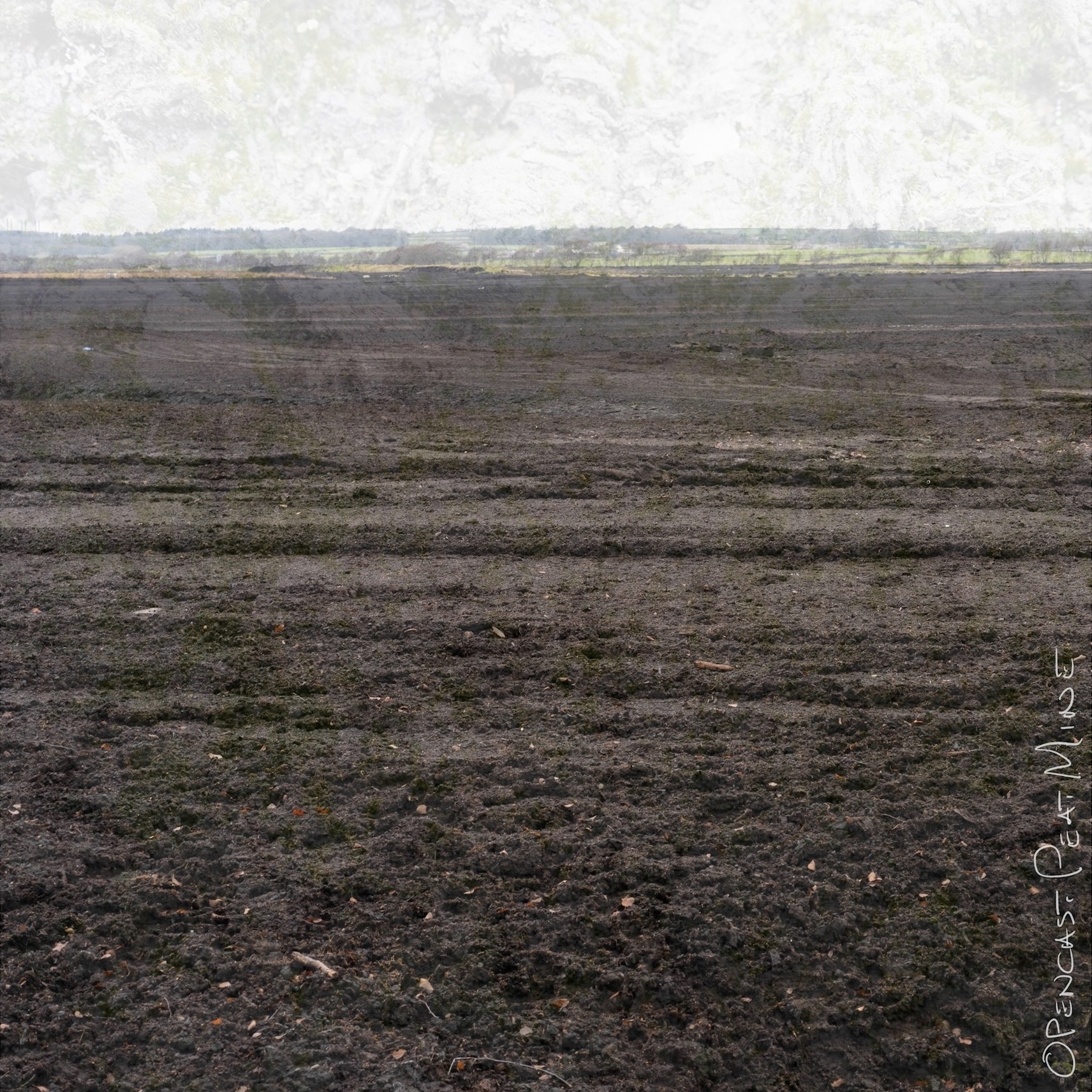
Twelve years on GCAT (our amazing local Glenkens & District Arts Trust), posed a deceptively open question, ‘How would you approach the Zero Footprint concept today?’ From that invitation, a a challenge had been set.
Considering the provocation this time round Mog and I worked independently, and I found myself examining the local landscape through markedly different eyes. Where my earlier attention had rested largely on the aesthetic and visual qualities of ‘landscape’, I was now drawn to what lies beneath and around them, including culture, identity, land use, management, and the consequences of human intervention for other-than-human lives. I wanted to explore place’. As I looked up and down the glen I realised I had long wanted to understand how different land uses around our house compared in terms of biodiversity, the number of species each holds and whether they differ. This notion resulted in a series of extended explorations in and around a range of woodland and agricultural systems, a designated area, an opencast peat mine, and our own ongoing landscape regeneration project.
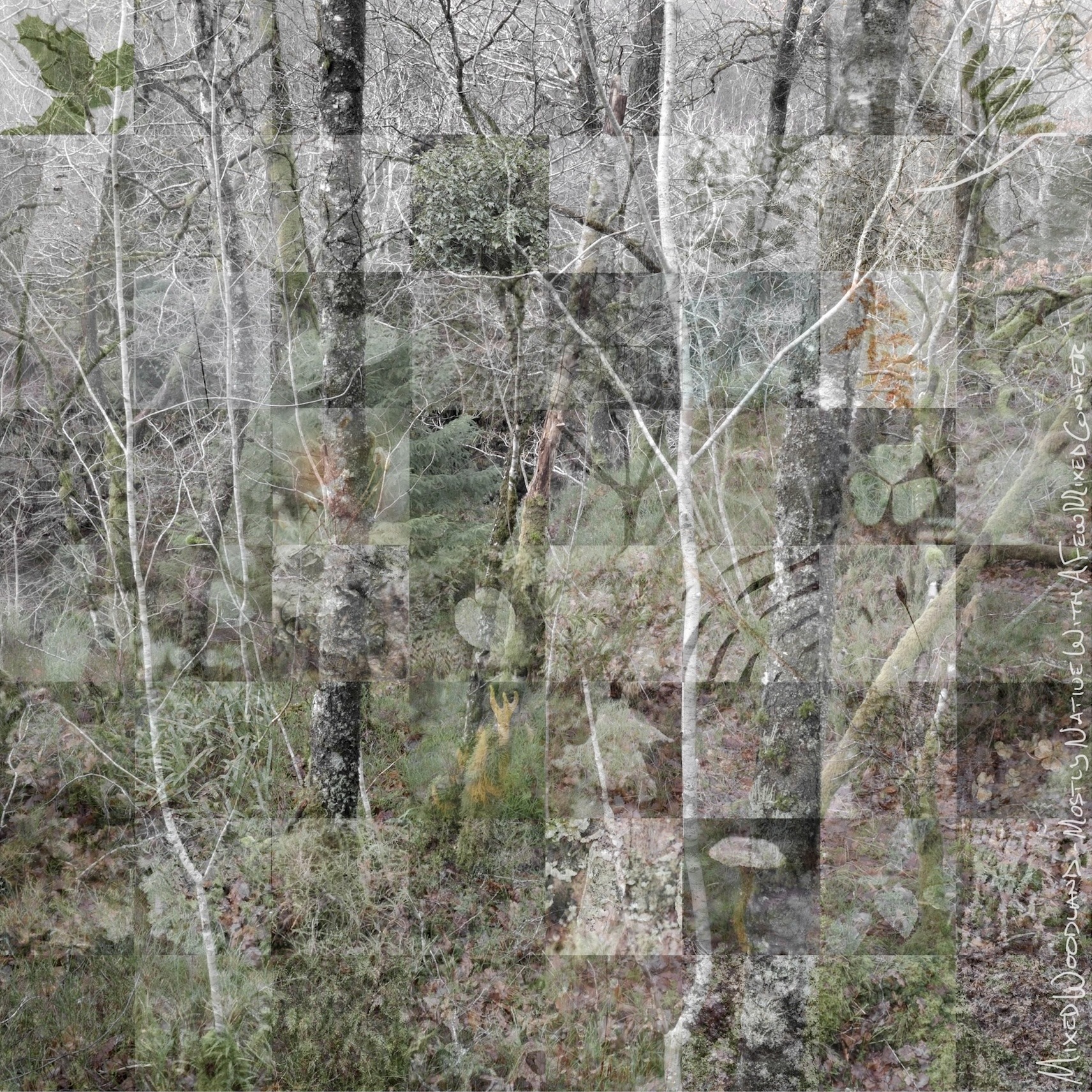
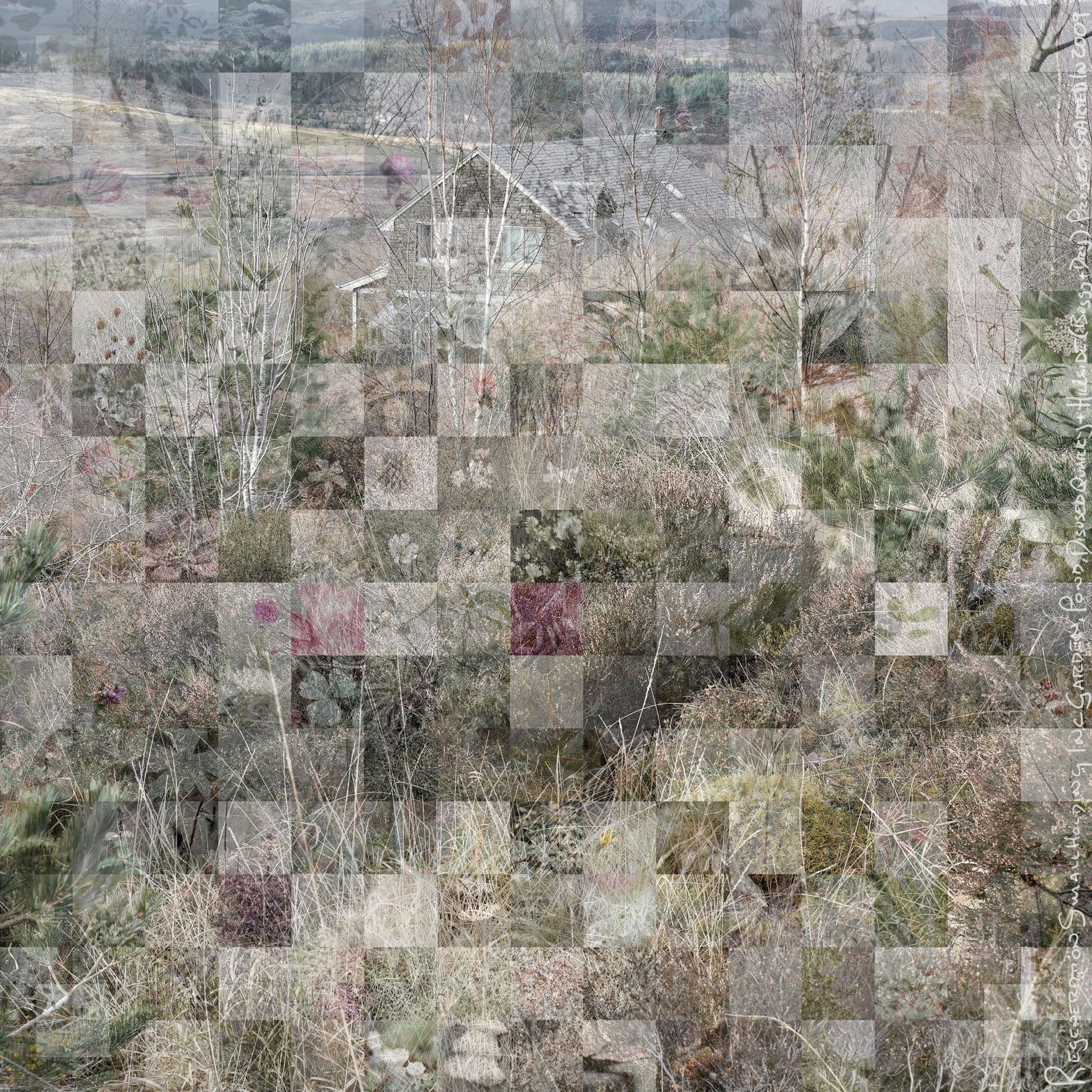
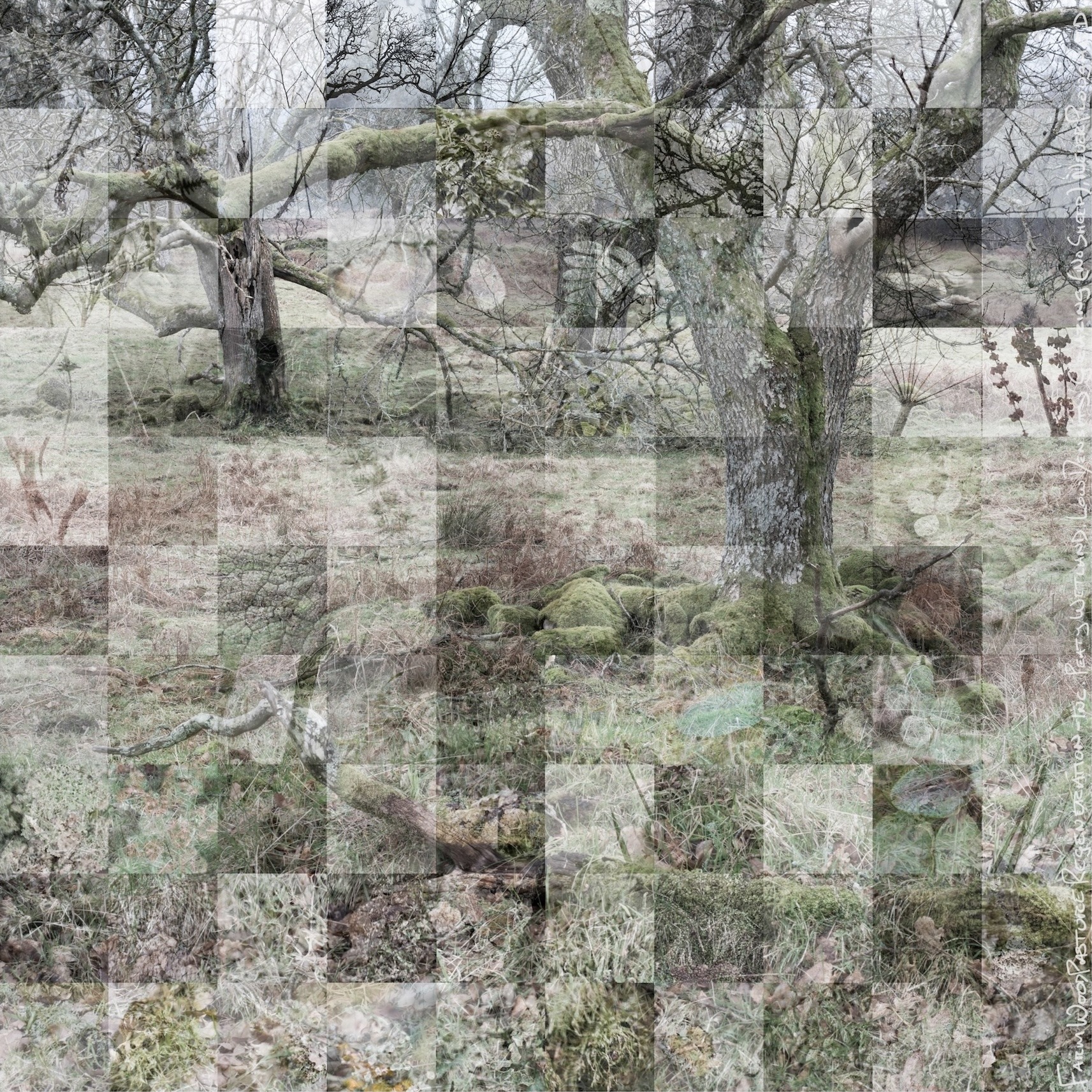
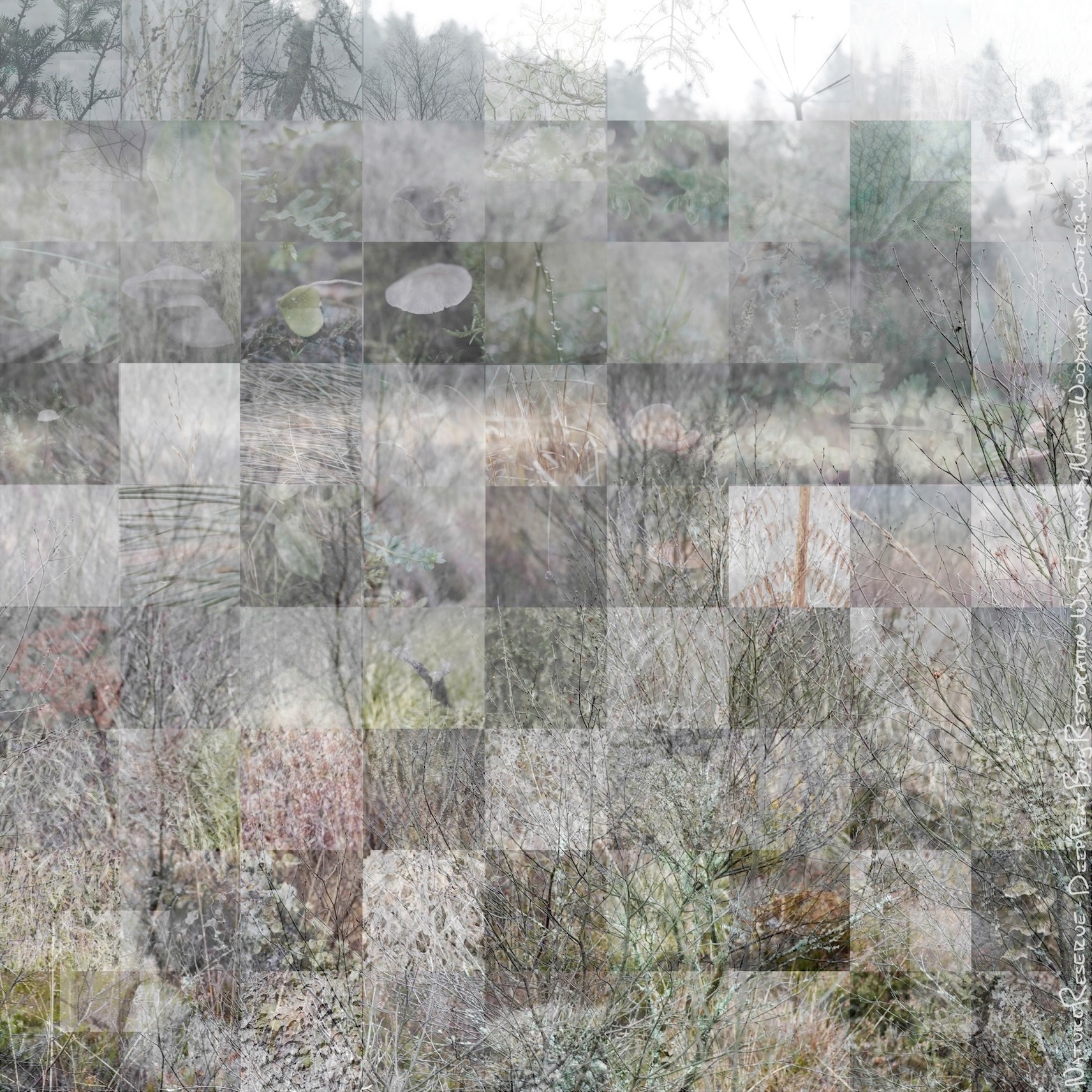
Within each location, over a comparable area and period of time, I recorded the different species of flora encountered, photographing each as a form of witness rather than collection. These were assembled into mosaic panels and overlaid onto images of their respective sites. Each work carries a single numerical title — the number of species observed — a stark reduction that mirrors the administrative language through which landscapes are so often understood and managed (the habitat type is scripted onto each image on the right hand side). The titles as presented in the thumbnails are #229, #98, #81, #59, #41, #22, #15, #13, #1
The viewer is invited to compare and contrast these mosaics, and in doing so to reflect on how human needs, traditions and interests shape the conditions under which biodiversity either flourishes or falters. It’s no longer whether human footprints exist, but how consciously we choose to place them.