IT's all pants!
What if the secret to the health of our landscape lies hidden in a humble pair of cotton underpants?
This is the question at the heart of ‘It’s All Pants’, an experimental pilot that unearths surprising truths about the land we live on. It forms one part of a long-term artistic inquiry supported by Creative Scotland, titled “If Place Mirrors Who We Are, What Does It Reflect?”.
This wider project explores how our choices in managing land—from dense cityscapes to remote countrysides—shape the health of a place for all who depend on it, human and non-human alike. Through photography, research, and community conversation, it seeks to reveal the unseen consequences of our actions and inspire new dialogues about a more resilient future.
The Experiment: A Simple Test, A Profound Story
The idea was straightforward. Conventional wisdom suggests that healthy, living soil, rich with microbes and fungi, will quickly decompose cotton. The more the fabric disappears after two months, the healthier the soil.
To test this, I buried 45 pairs of cotton underpants across 15 distinct locations in Scotland as a pilot project. The sites represented a cross-section of the modern, rural, Galloway landscape:
- Ancient Woodlands: A remnant of a temperate rainforest and a managed conifer plantation.
- Farming Pastures: From 30-year organic meadows and wood pastures to intensively fertilized silage fields.
- Protected & Restored Land: A Site of Special Scientific Interest (SSSI) and a former pasture now 16 years into a rewilding project.
- And for comparison: a simple garden compost heap.
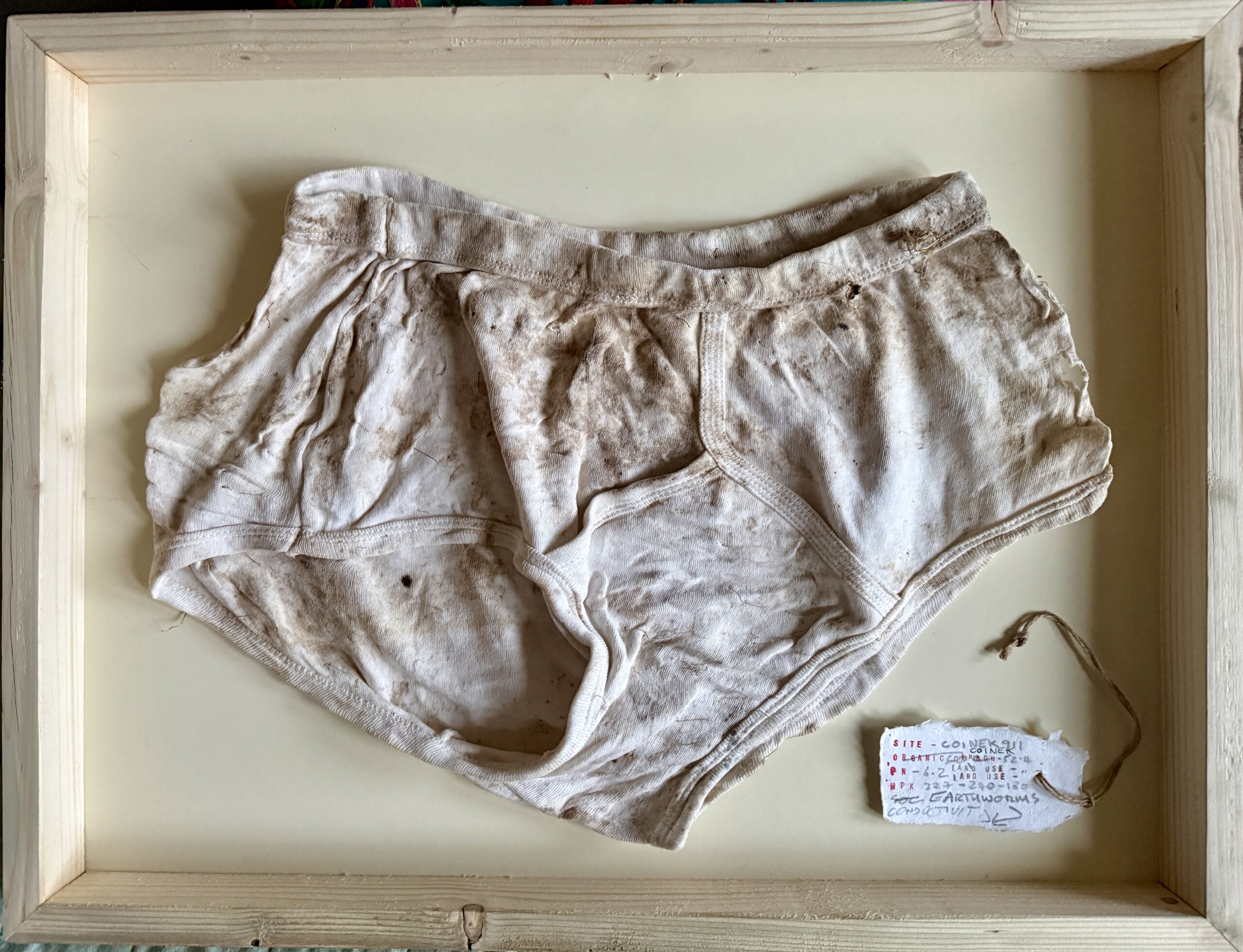
Alongside the underpants, I also counted the earthworms – another classic indicator of a thriving habitat, as well as completing a range of photographic and more conventional visual and lab based assessment (e.g. PNK, conductivity, soil organic carbon, pH) to enable different analysis of the results to be made and compared. I worked in collaboration with the SRUC and Glasgow University to give a level of rigour to the methodology and share learnings.
The Revelation: An Unexpected Twist
Two months later, I dug them up. The results were not what I or various landowners expected, or what conventional thinking tells us.
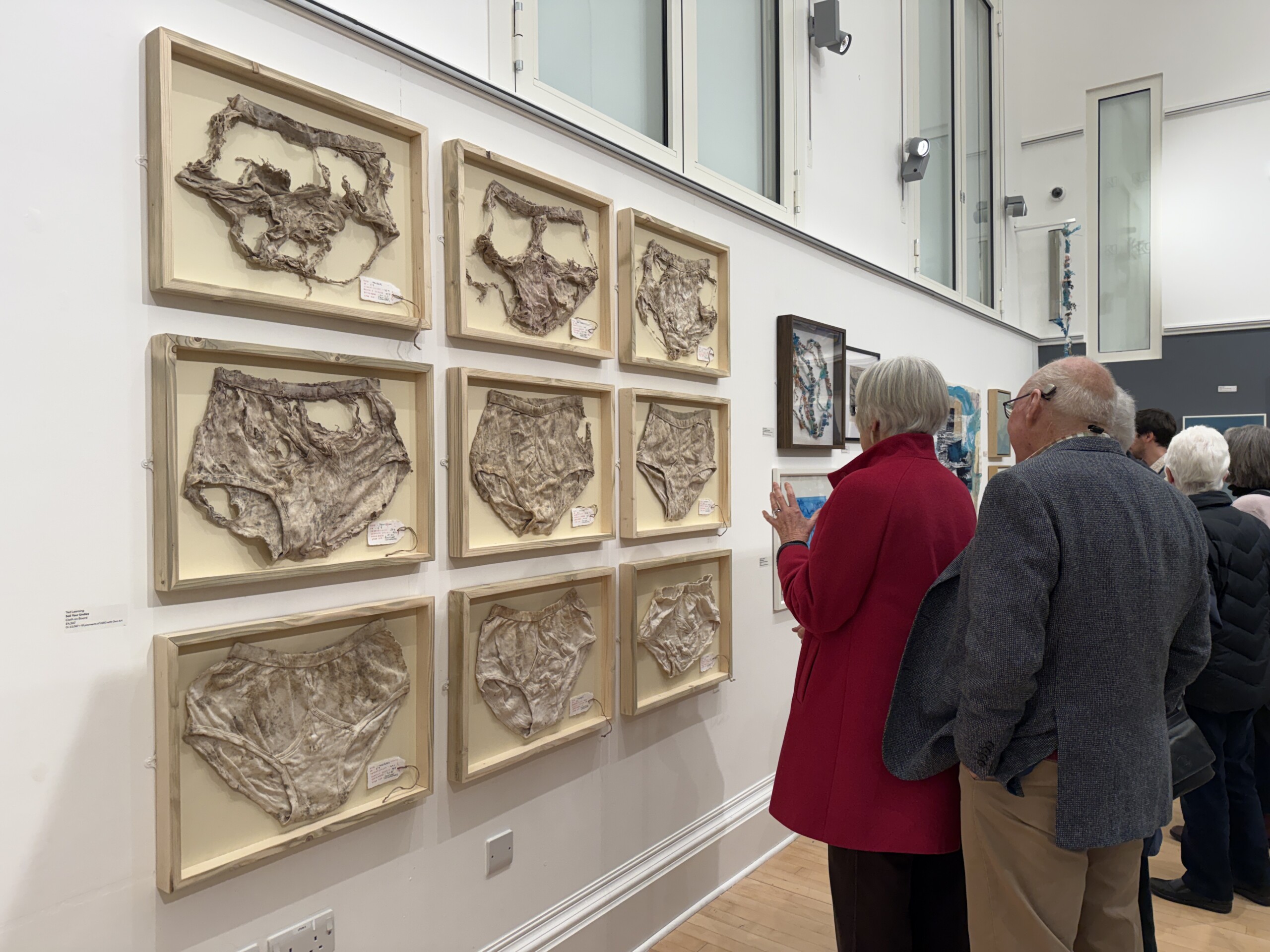
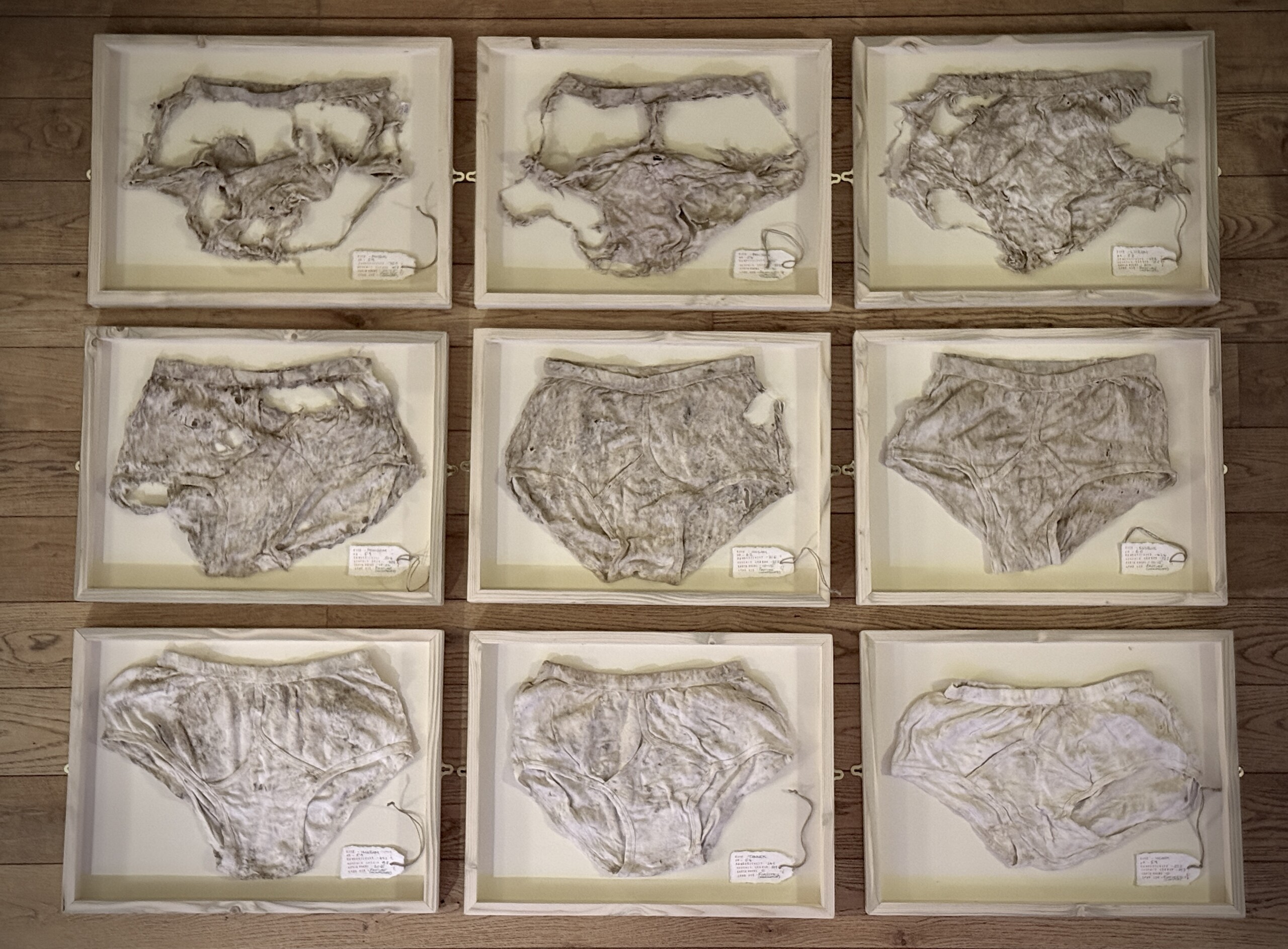
The underpants that had almost completely vanished, returning to the earth, were not from the ancient woods or the organic meadows. They were from the intensively managed, non-native, fertilized pastures and silage fields. Not only that, but these were also the sites with the most earthworms.
Conversely, the underpants from the native woodlands, the unimproved pastures, and the rewilding site remained shockingly intact. So what was going on?
A Deeper Question
This project doesn’t offer a simple answer. Instead, it asks a more important question: Is our common understanding of “soil health” incomplete?
When we rely on simple metrics, what do we fail to see? The results challenge us to look beyond conventional statements and question the messages we are taught about the land. They invite a deeper, more nuanced conversation about what true ecological health looks like – a health based not just on rapid decomposition, but on biodiversity, resilience, and the complex, slow-growing life of an ecosystem. Of observing and listening, not just to the science and latest thinking, but to the land and the wisdoms of the past. Indeed, as Suzanne Simard says in her revolutionary book Finding the Mother Tree,
“Indigenous peoples have long understood what Western science is only now beginning to demonstrate”.
The framed underpants presented in the exhibitions are the artifacts of this inquiry, each one telling a story about the ground beneath our feet and forcing us to reconsider what it means to care for a place.
By now I was right in the rabbit hole, and the investigation continued with an AI dialogue, exploring how I might better understand such challenging results. the conversation is presented in the following pdf.
AI Dialogue
Sharing Results
Sharing findings were a core element of the pilot. With this in mind the undergarments were exhibited at the following venues
- Kirkcudbright Galleries – group show
- The Catstrand, New Galloway – solo exhibition of the wider project including ‘Soil Your Undies’
- MacRobert Gallery, Stirling University – solo exhibition of the wider project including ‘Soil Your Undies’ (August/September 2026
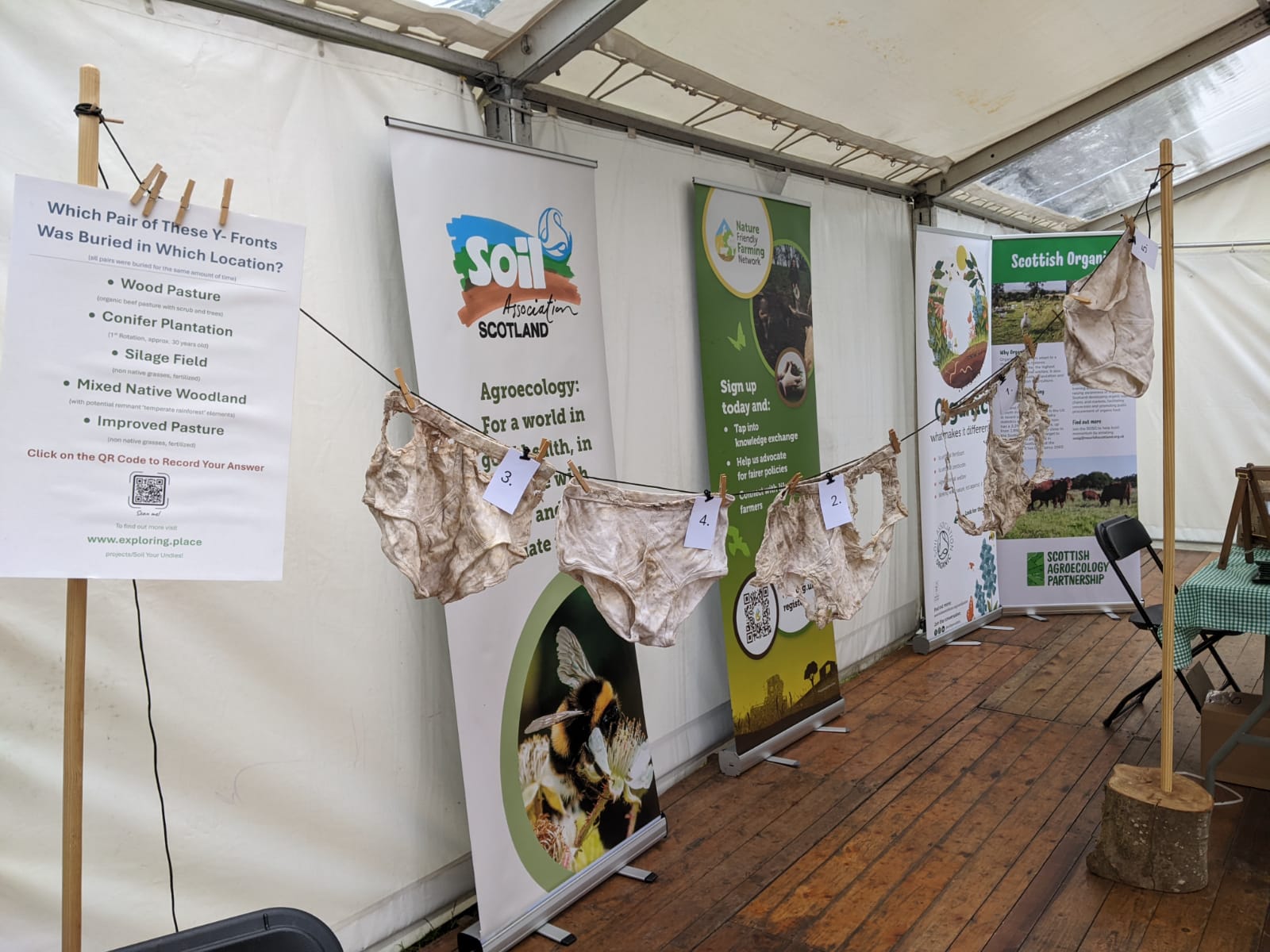
- Royal Highland Show 2026 – part of the ‘sustainable agriculture tent’ display
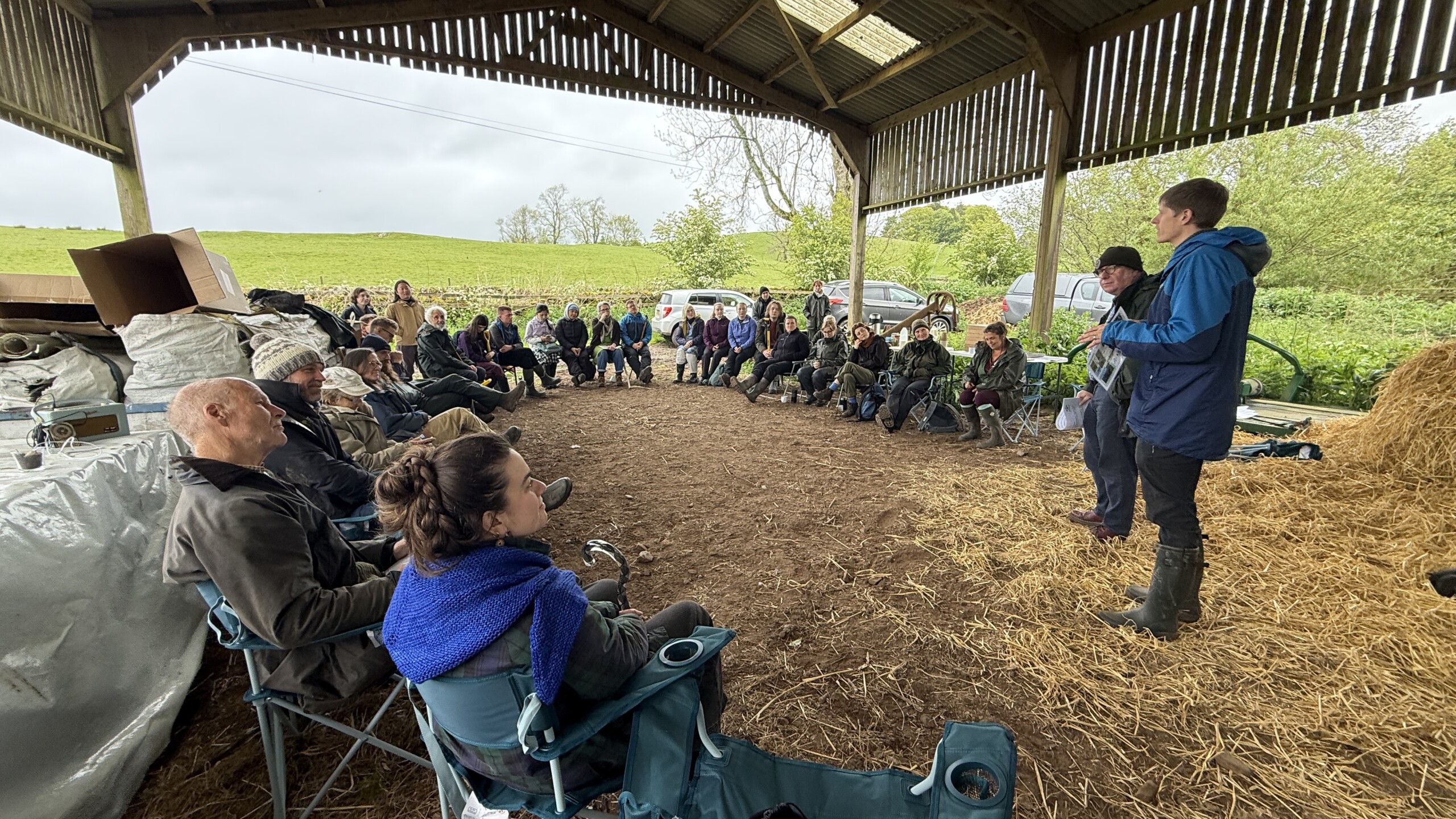
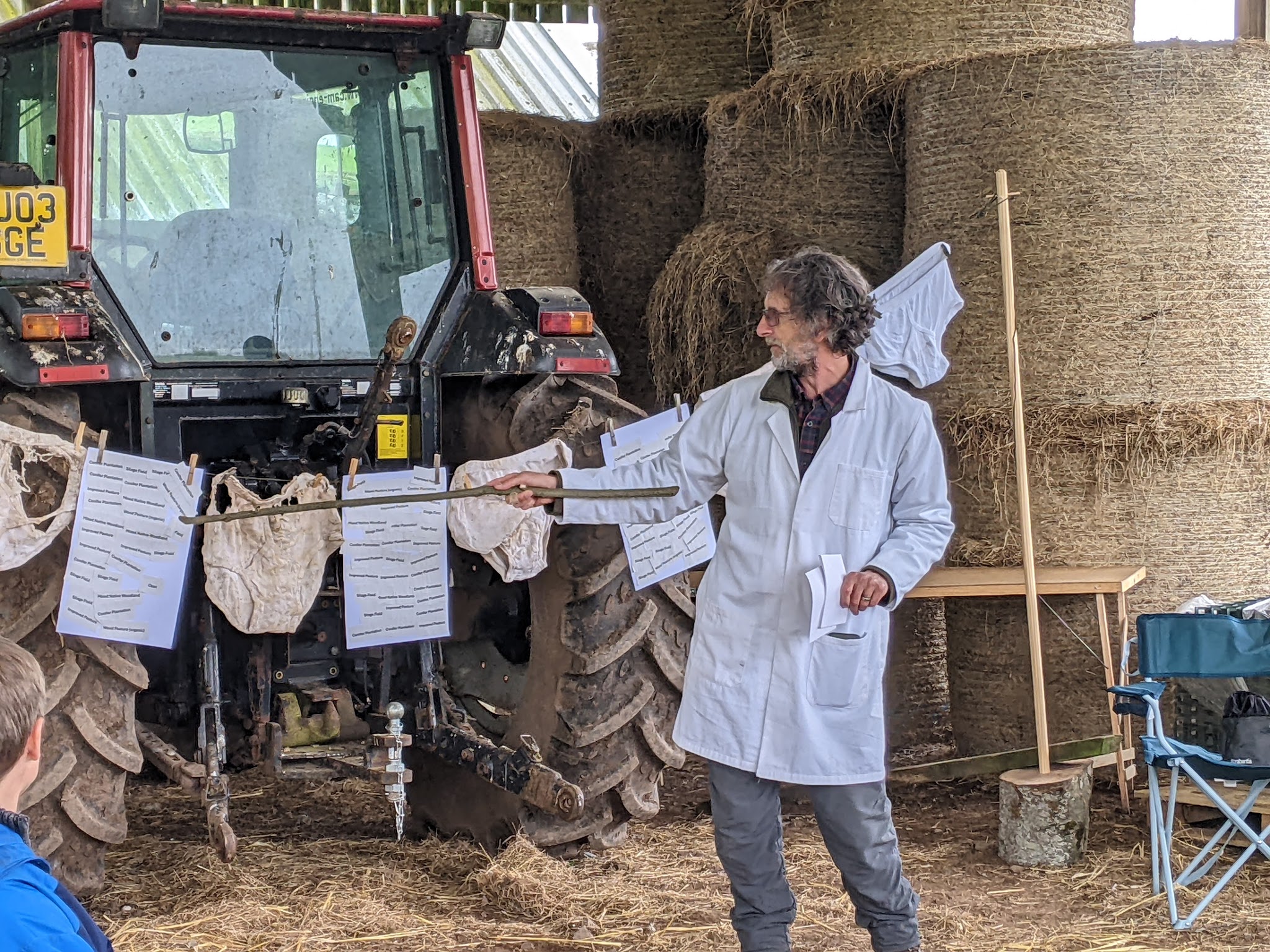
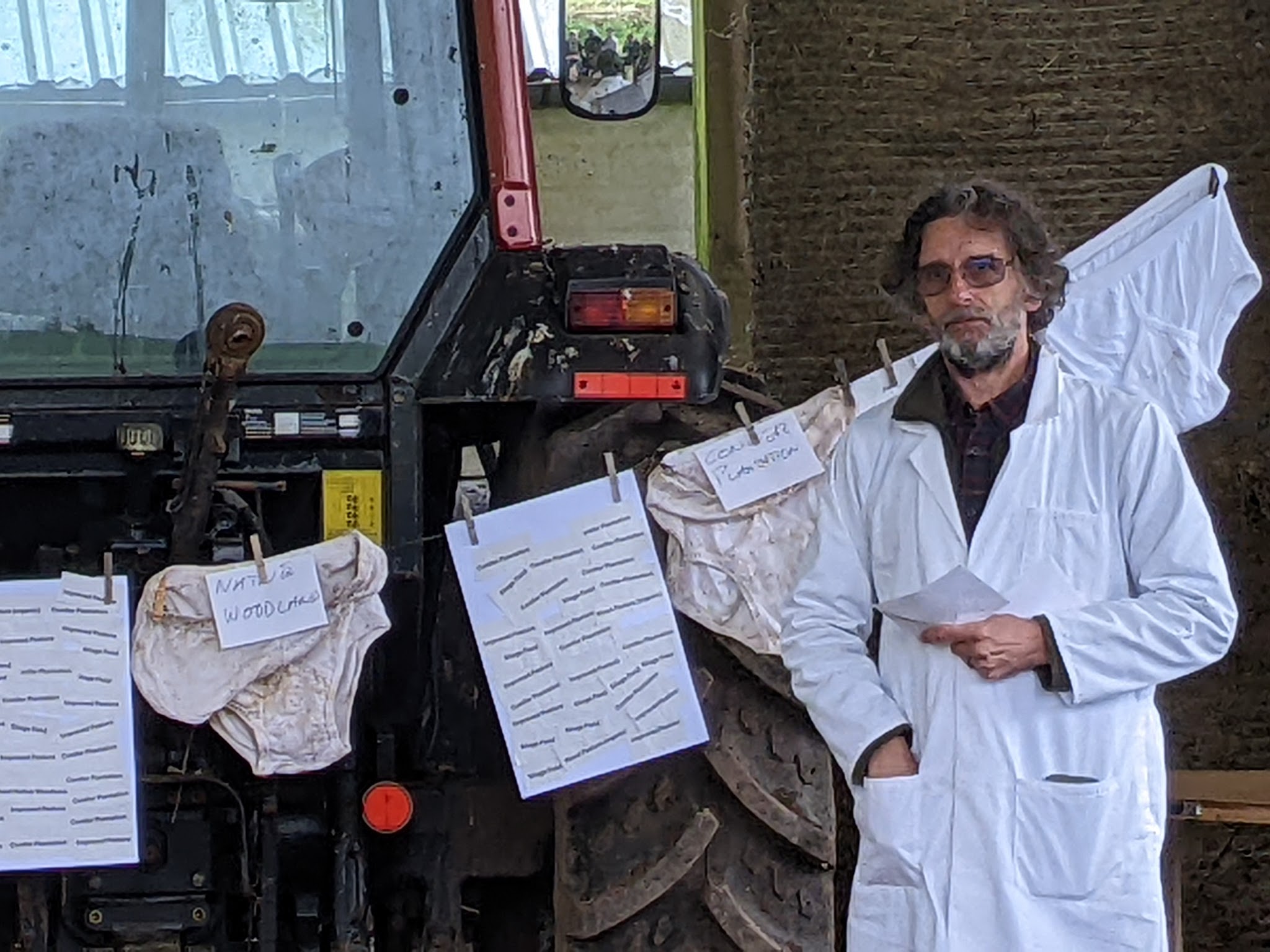
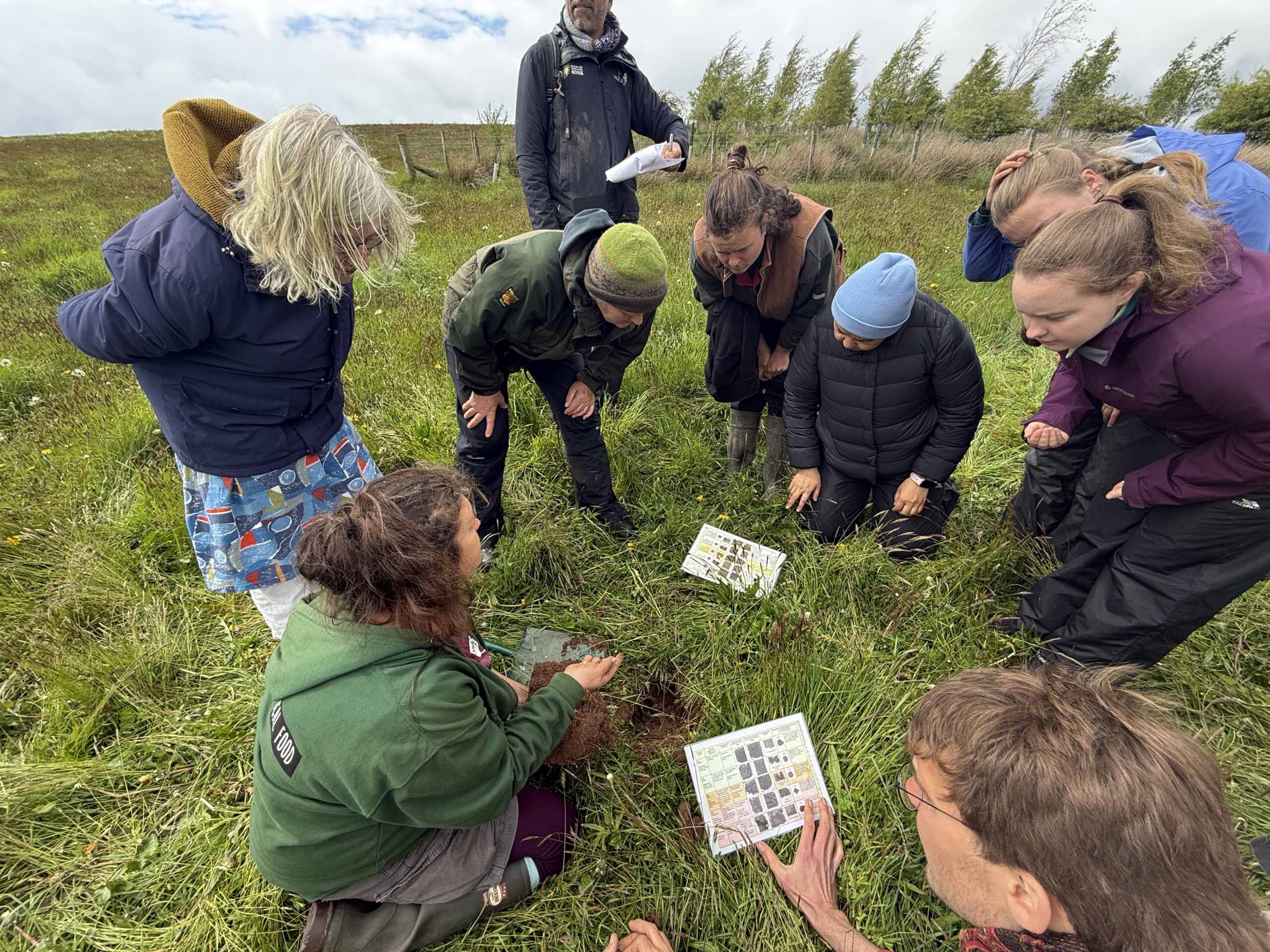
A further one day workshop was also held which was specifically targeted towards land managers e.g. farmers, foresters), with partners and within an environment of trust – in a barn on a working farm! The day included an interactive discussion around the undergarments, a ‘soil/sound’ interaction, and a range of more conventional field based engagements. The day was a collaboration with Propagate, SRUC, Glasgow University and included 10 students who undertook and presented experiments on soil carbon dioxide experiments which they share with the 30 workshop attendees. I am forever grateful to all those, including the attendees on the day, who made the event fun as well as informative.